Panda DIY Pen Holder Blocks: Tidy Desk Tree Stump
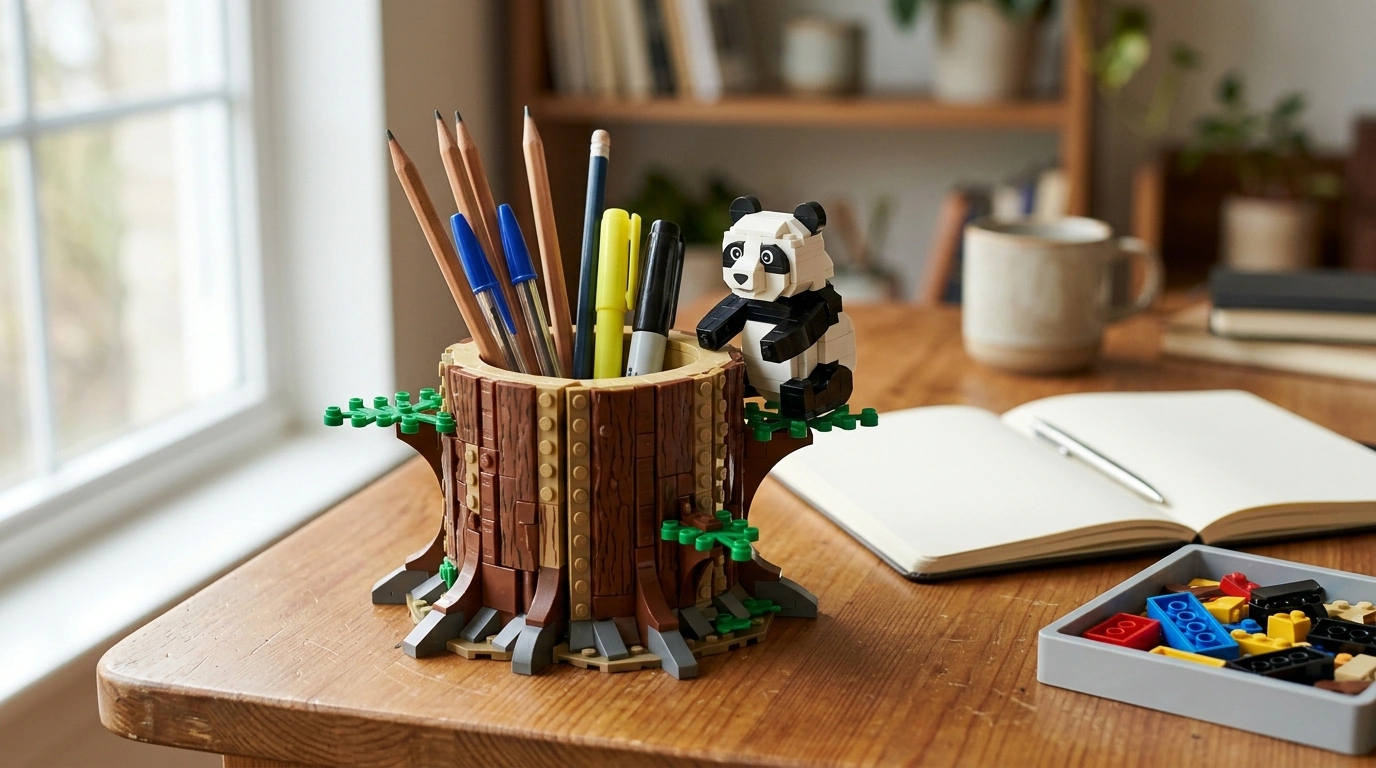
Panda Building Blocks Pen Holder & Tree Stump DIY Set: Build, Learn, and Tidy Up the Desk
A desk can be both playful and practical. Our Panda Building Blocks Office Pen Holder and Tree Stump DIY Educational Toy combines a small building project with a useful organizer—so the finished piece keeps pens, pencils, markers, or small desk tools in one neat spot while also offering a hands-on building activity.
When you’re trying to make studying, journaling, or creative time feel more inviting, a build-and-use desk item does double duty: you get a focused activity first, then a daily “home base” that quietly prevents clutter from creeping back in.
What it is (and why it’s more than a cute desk piece)
This is a DIY building-block set that assembles into a panda-themed pen holder with a tree stump look. Once you’ve finished the build, it functions as a compact desktop organizer for everyday stationery, helping you keep the items you reach for most in one consistent spot.
The building process itself supports attention to steps and careful hand placement, and the finished result reinforces a satisfying idea: you made something that actually gets used. It’s also a fun gift choice for students, panda lovers, and anyone who likes desk décor that does a job.
Where it fits best: desk uses at home, school, and the office
- Study corner: Keep writing tools visible and easy to grab during homework, note-taking, or drawing sessions.
- Work desk: Corral pens, highlighters, a stylus, and small notes to cut down on “where did that go?” moments.
- Creative table: Hold markers, brush pens, craft tools, or small accessories you use often.
- Entryway or bedside: Create a small drop-zone for a pen, letter opener, or other everyday essentials.
If you’re aiming for a calmer workspace, the biggest win is reducing micro-messes. A dedicated holder means you’re not constantly sweeping tools into a drawer—or leaving them scattered until they vanish under papers.
Skills it supports while building
- Fine-motor control: Placing and aligning small pieces encourages hand strength and coordination.
- Patience and persistence: Step-by-step building rewards steady progress without rushing.
- Spatial reasoning: Matching shapes and layers helps you think in 3D and anticipate what comes next.
- Planning and organization: A build-and-use item reinforces that making something can solve a daily need—like desk storage.
Play and hands-on projects are widely recognized as meaningful learning experiences—especially when they invite focus, problem-solving, and creativity. If you’d like to explore the broader benefits, the American Academy of Pediatrics highlights why play matters for development (AAP: The Power of Play), and Harvard’s Center on the Developing Child discusses how learning is strengthened through responsive, engaging interactions (Harvard: Play and learning).
How to make the build smoother (quick, practical tips)
- Sort before you start: Group pieces by color or size so you spend less time searching mid-build.
- Contain the workspace: Build on a tray or shallow box lid so small parts don’t scatter.
- Check alignment at milestones: Pause at major steps to confirm everything lines up before pressing pieces firmly together.
- Make gifting feel special: Present it in two stages—first a “build night,” then the reveal as the new pen home on the desk.
One small habit makes the finished organizer more effective: decide what “lives” there. If you choose the same core tools (for example: two pens, one pencil, one highlighter, one marker), your desk stays tidy without extra effort.
What makes a good DIY desk organizer set (comparison checklist)
If you’re comparing buildable organizers, look for a finished piece you’ll actually use—not just display. Stability matters, the opening should be easy to access, and the size should be desk-friendly near a keyboard, notebook, or lamp. A theme you enjoy (like a playful panda with a nature-inspired stump vibe) helps it stay out on the desk where it can do its job.
| Feature | Why it matters on a real desk | Simple way to evaluate |
|---|---|---|
| Holds everyday tools | Reduces clutter and saves time during work/study | Check if it fits pens, pencils, and at least one thicker marker |
| Build feels manageable | Keeps the project fun instead of frustrating | Look for a clear step-by-step approach and a logical assembly flow |
| Stands steady | Prevents tipping when reaching in | Place on a smooth surface and test a few quick grab-and-return motions |
| Looks good in the space | Encourages continued use (not hidden in a drawer) | Pick a theme that matches the desk vibe—cute, minimal, or playful |
Gift ideas and small “desk-upgrade” pairings
If you’re assembling a practical “campus-ready” gift bundle, you can also pair desk organization with everyday comfort items—like our Calvin Klein Casual Sneakers with Sleek Design and Comfortable Fit—so you’re supporting both the study space and the day-to-day routine.
Care and day-to-day use
FAQ
Is this meant to be a toy or a desk organizer?
It’s both: you build it as a DIY, hands-on activity, and the finished piece is a functional pen holder you can use every day. That mix makes it great for play, learning, and keeping your desk more orderly.
What can the finished holder store?
You can use it for pens, pencils, highlighters, markers, and a stylus, plus small desk essentials you want within easy reach. It’s especially handy for keeping your most-used writing tools in one consistent spot.
Is it a good gift for students or office workers?
Yes—its compact size fits study desks and office setups, and the playful theme keeps it fun without losing practicality. Pairing it with a notebook or a small pen set turns it into a ready-to-use desk upgrade.








Leave a comment