Infinity Modular Cat Tree Tower: Layout & Placement Tips
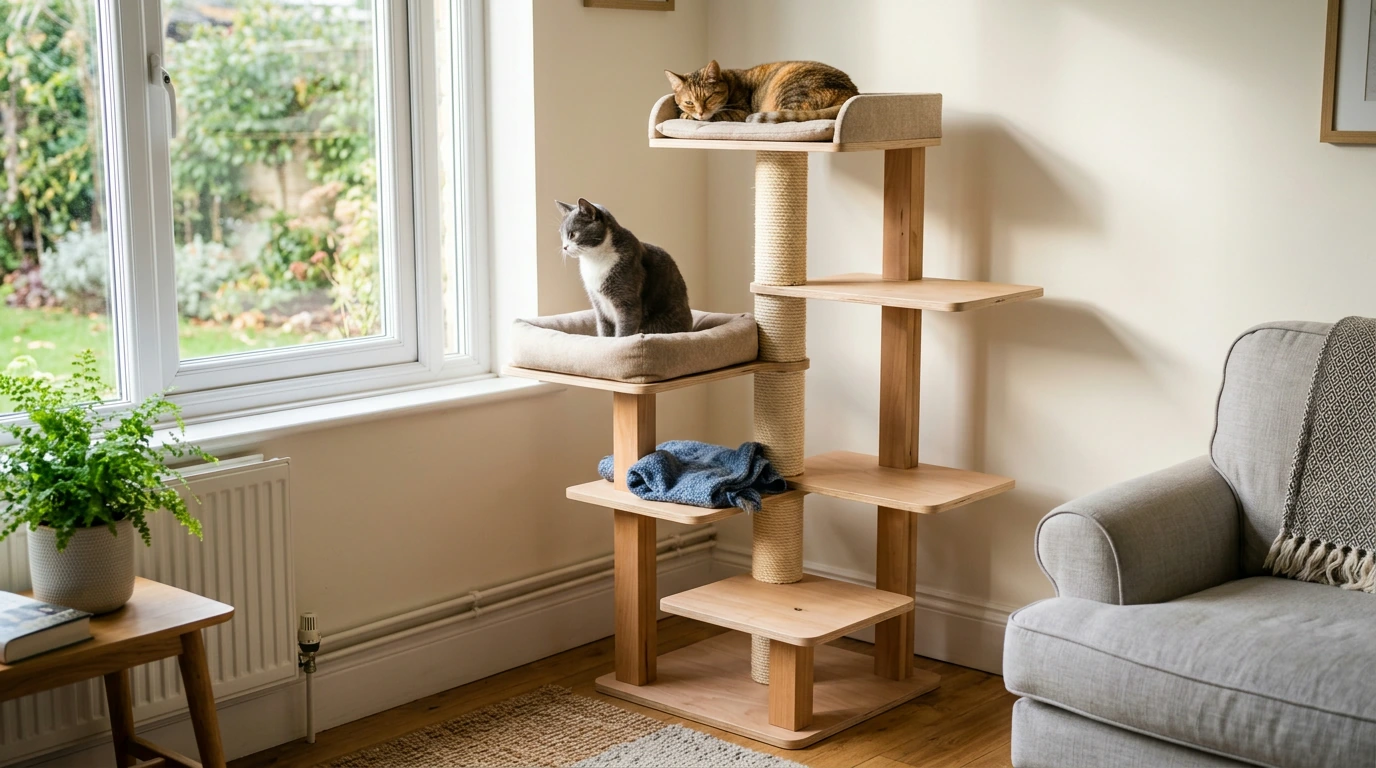
Infinity Modular Cat Tree Tower: Build a Climbing World That Fits Your Home
Cats don’t just want a place to sit—they want a route, a lookout, and a few “owned” zones that feel safely off the floor. Our Infinity Modular Cat Tree Tower is designed for that kind of everyday living: a configurable tower setup that can grow with your space, your cat’s habits, and multi-cat dynamics. Here’s how to plan the layout, what to prioritize for real-life use, and how to make the most of a modular tower from day one.
Why a modular tower changes the way cats use vertical space
A fixed cat tree can be a great “spot.” A modular tower can become a “system”—and that’s closer to how many cats naturally move and settle in a home.
- Creates a predictable path: Cats often prefer repeatable routes (up, across, down) rather than a single perch that requires one big jump.
- Supports different “jobs” in one footprint: Lounging, observing, scratching, and quick retreats can coexist when levels are staggered.
- Adapts to behavior over time: Kittens climb differently than adults; confident cats jump farther than cautious ones—modularity lets you adjust without replacing the whole setup.
- Helps manage multi-cat traffic: Adding alternate levels or split routes reduces bottlenecks and “guarded” choke points near a favorite perch.
If you’d like a deeper look at what cats generally need from their environment, the American Association of Feline Practitioners (AAFP) environmental needs guidelines and the ASPCA’s cat enrichment guidance are solid references for building a calmer, more usable home setup.
Set-up priorities that make a tower feel instantly “cat-approved”
The goal on day one isn’t perfection—it’s making the tower feel obvious and safe to use so your cat starts forming habits around it.
- Start with the destination first: Place the highest resting spot where your cat already likes to watch the room, not tucked behind bulky furniture.
- Keep jumps comfortable: Build a gradual climb (more steps, shorter gaps) for cautious cats; use fewer levels with slightly larger transitions for athletic cats.
- Anchor it to everyday life: Position near a window, a family room corner, or a calm hallway—cats use towers more when they can overlook activity without being in it.
- Pair with familiar scents: Add a small blanket or fabric your cat already naps on to the main lounging level so the tower smells “safe” immediately.
- Give scratching a purpose: Route the climb so your cat naturally passes the scratching area on the way up or down.
Quick layout guide for common home situations
| Home situation | Modular layout goal | Best first adjustment to try |
|---|---|---|
| Small apartment / limited floor space | Vertical climb with a compact base | Add one intermediate step so the ascent feels easier |
| Multi-cat household | Two routes up to reduce blocking | Stagger resting spots so cats can avoid direct face-to-face passing |
| Shy or newly adopted cat | Safe lookout with an easy retreat | Keep top perch facing the room; place a lower “hideaway” level below |
| High-energy climber | Active route with distinct levels | Increase spacing between a couple of levels for more dynamic movement |
| Senior or cautious jumper | Gentle staircase feel | Add more closely spaced steps and keep the most-used rest spot mid-height |
Making it work for one cat vs. multiple cats
“More cats” doesn’t just mean “more height.” It often means more options and fewer forced encounters.
- For one cat: Prioritize one “best seat” (top or mid-top), plus one dedicated scratching zone that’s on the route—not off to the side.
- For two cats: Aim for two preferred resting levels with different sightlines so both can claim space without constant negotiation.
- For three or more: Build a layered “neighborhood”—multiple mid-level resting spots matter as much as the top perch.
- Reduce resource guarding: Avoid placing the only comfortable perch directly over the litter area or a narrow doorway where cats may block each other.
- Create choice: Cats often relax faster when they have at least two acceptable options (two nap spots or two scratching zones).
Where the Infinity Modular Cat Tree Tower fits best at home
Placement does more than “make it look nice.” It decides whether your cat treats the tower as furniture—or as part of their daily route.
Everyday care: keeping the tower inviting
A simple first build plan (then customize from there)
In-stock picks from our store
- Infinity Modular Cat Tree Tower — our modular option for building a stable, repeatable vertical route that you can reconfigure as your cat’s needs change.
- Calvin Klein Casual Sneakers with Sleek Design and Comfortable Fit — a practical pair if you want comfortable footing while you’re assembling, moving, or tightening components around the house.
FAQ
Is a modular cat tower better than a fixed cat tree?
A modular tower is often easier to keep useful over time because you can adjust height, spacing, and routes as your cat’s confidence, age, and household dynamics change—without replacing the entire setup.
How do you place a cat tower so cats actually use it?
Place it where your cat already likes to observe: near a window or at the edge of a social room, ideally in a corner for security and away from loud or startle-prone zones like slamming doors or laundry areas.
What layout works best for multiple cats?
Plan for at least two preferred resting levels with different sightlines, and if possible create two routes up so one cat can pass without being blocked or forced into a face-to-face encounter.









Leave a comment