Antique Arched Metal Mirror: Placement, Style & Care
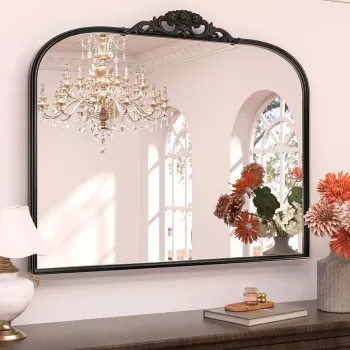
Antique Arched Metal Mirror: A Classic Curve That Elevates Any Wall
An arched mirror brings instant architecture to a room—softening straight lines, lifting ceilings visually, and making light feel more generous. Our Antique Arched Metal Mirror pairs that graceful shape with a metal frame for a look that feels collected, not trendy: grounded enough for modern spaces and character-rich enough for vintage-inspired interiors. If you’re trying to make a space feel “finished” without adding clutter, an arched mirror is one of the most effective moves you can make.
Why an arched mirror works in real homes
Curves change how a room reads. Where rectangles can feel rigid, an arch introduces a subtle focal point that still feels tailored.
- Creates a doorway-like silhouette that adds structure above consoles, mantels, and vanities.
- Helps a room feel taller by echoing the curve of windows, alcoves, and built-ins.
- Expands natural and lamplight—ideal for entryways, narrow halls, and dim corners.
- Balances hard edges (square tile, boxy furniture) with a softer line that still feels composed.
One practical tip our team uses when planning a wall: treat the arch as “visual trim.” Even if the rest of your room is simple, the curved top gives the wall an intentional, designed feel.
The appeal of a metal frame with antique character
Metal frames are especially good at defining a mirror’s outline. From across the room, they read crisp and finished—helpful when you have layered textures (rugs, drapery, baskets, books) competing for attention.
- Metal framing brings a clean outline that reads sharp from a distance, even in busy rooms.
- Antique-style finishes add depth—pairing naturally with warm woods, stone, leather, and linen.
- A metal-framed mirror transitions easily between styles: modern farmhouse, industrial, classic traditional, and eclectic.
- Works as a focal point without requiring bold pattern or loud color—especially helpful in smaller spaces.
If your home already has mixed metals (for example, black hardware in one room and warmer tones elsewhere), an antique-inspired frame can act like a “bridge” between finishes so the mix looks deliberate rather than accidental.
Where it looks best: placement ideas that feel intentional
The best placement is usually wherever the mirror can do two jobs at once: reflect light and reinforce a functional zone (entry drop spot, vanity, mantel focal point).
- Entryway: Hang above a slim console to create a “last look” station; add a tray for keys and a small lamp for glow.
- Living room: Center over a mantel or credenza to reflect artwork and make the room feel broader.
- Dining room: Place opposite a window to double the light and highlight a centerpiece or chandelier.
- Bedroom: Style above a dresser; keep the surface edited (a book stack, catchall, and one vase) so the mirror stays the hero.
- Bathroom or powder room: An arched mirror softens tile lines—especially striking above a straight-edge vanity.
Quick placement guide for an arched mirror
| Spot | Best height rule | Style tip |
|---|---|---|
| Over a console | Bottom edge 6–10 inches above the surface | Add a lamp on one side to create flattering reflected light |
| Over a mantel | Center at eye level; keep at least a few inches above the mantel top | Let the arch echo nearby curves (vase, sconce, or round object) |
| In a hallway | Center at average eye level; avoid crowding door casings | Pair with a runner to visually “lengthen” the space |
| Above a vanity | Keep comfortable headroom; align with faucet/vanity center | Use warmer bulbs to avoid harsh reflections |
| Leaning (if supported safely) | Angle slightly back; ensure stable contact points | Layer with a basket or plant nearby for a relaxed, collected look |
How to style it so it looks collected, not staged
A mirror can elevate a room, but it can also look “placed” if the styling around it is too matchy or too busy. The goal is simple: repeat a few cues and then let the arched outline breathe.
- Match undertones: Pair antique metal with warm neutrals (cream, camel, olive) or deep classics (ink, charcoal, oxblood).
- Mix materials: Set metal against wood, stone, or woven textures to keep the look inviting.
- Use symmetry lightly: Two sconces can frame the mirror, but a single lamp + stacked books can feel more lived-in.
- Keep surrounding décor calm: Let the arched outline stand out by avoiding competing shapes right beside it.
- Repeat the curve: A rounded bowl, arched lamp, or curved-back chair nearby makes the mirror feel integrated.
Care basics for long-lasting clarity and finish
For general, museum-informed care principles (like minimizing moisture and using gentle materials), you can also reference guidance from the Smithsonian Museum Conservation Institute and the American Institute for Conservation.
In stock in our shop
- Antique Arched Metal Mirror
- Calvin Klein Casual Sneakers with Sleek Design and Comfortable Fit
- Calvin Klein Women’s Leather Sneakers
A finishing touch that changes the whole room
FAQ
What rooms are best for an antique arched metal mirror?
Entryways, living rooms, dining rooms, bedrooms, and bathrooms all benefit because the arch adds a sense of height while reflecting natural or lamplight. For the biggest impact, place it where it can bounce light from a window, pendant, or table lamp into the room.
How high should an arched wall mirror be hung above a console or dresser?
A reliable rule is to hang it so the bottom edge sits about 6–10 inches above the furniture surface. Keep the overall mirror centered to the furniture (and roughly at eye level) so it feels anchored, then balance the setup with a lamp or sconces if you want extra glow.
How should the metal frame be cleaned without damaging the finish?
Dust the frame with a dry microfiber cloth and avoid abrasive pads that can scratch the finish. If you need to clean nearby glass, spray product onto the cloth (not the frame) and keep moisture minimal, drying immediately if any dampness reaches the metal.







Leave a comment