Safer Outdoor Time for Indoor Cats: Wooden Enclosure
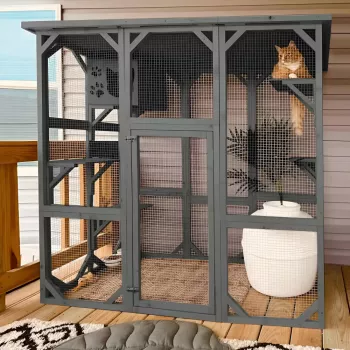
Safe outdoor enrichment for indoor cats—without free roaming
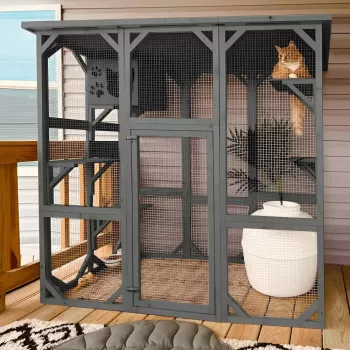
Outdoor time is a big deal for indoor cats: fresh air, new sights, and a place to climb can brighten daily routines—if it’s done safely. Our Large Wooden Outdoor Cat Enclosure with Platforms, House, and Weatherproof Roof is built to give your cat a secure, enriching space outside, with multiple platforms for movement, a sheltered house for downtime, and a weatherproof roof to help keep the interior more comfortable when conditions change.
Veterinary and welfare organizations consistently emphasize that outdoor risks are real and that controlled outdoor access can be a practical compromise. If you’d like more background on common hazards and safety considerations, you can review guidance from the American Veterinary Medical Association (AVMA), the ASPCA, and the Humane Society of the United States.
What this enclosure adds to everyday outdoor time
When you’re trying to make outdoor sessions both enjoyable and predictable, structure matters. This enclosure creates a defined zone that supports natural cat behavior—watching, climbing, pausing, and retreating—while helping reduce common backyard risks.
- A defined, secure outdoor zone that helps reduce common backyard risks while still offering fresh air and stimulation.
- Platforms create vertical variety—useful for cats that like to perch, watch, and move between levels rather than pace on a flat surface.
- An enclosed house area gives a quieter “retreat” spot for naps, decompression, or getting out of direct sun and wind.
- The weatherproof roof is designed to help with light rain and sun exposure so outdoor sessions can be more consistent across seasons.
At-a-glance comfort and enrichment features
| Feature | Why it matters for cats | How to use it well |
|---|---|---|
| Platforms | Encourages climbing and perching; supports natural monitoring behavior | Place the enclosure where there’s a view (garden, trees), and rotate a toy or chew-safe stick occasionally for novelty |
| Enclosed house | Adds a hiding/resting zone to reduce stress and overstimulation | Line with a washable mat; keep one familiar-scent item inside for quicker acceptance |
| Weatherproof roof | Helps limit harsh sun and keeps light precipitation off key areas | Angle placement so water sheds away from doors; check after storms and clear debris |
| Wooden build | Often feels warmer and more “home-like” than all-metal runs | Inspect surfaces regularly; keep it on a level base for stable footing |
Where it fits best: patios, yards, and side runs
Placement can make the difference between an enclosure that gets used daily and one that feels inconvenient. Aim for a spot that supports quick access, comfortable temperatures, and a calming view.
- Patio placement works well for daily supervised sessions—especially when the entry door is close to the home.
- A yard corner can become a calm “cat zone” when paired with shrubs (outside the enclosure) that create a more natural view without encouraging climbing onto the top.
- A side-yard run is ideal for households that want outdoor access without placing the enclosure in high-traffic family areas.
- Choose a spot with partial shade when possible; morning sun and afternoon shade can help keep the enclosure more comfortable.
If your yard gets strong afternoon sun, prioritize shade and airflow over the “prettiest” location. Cats often use an outdoor space more when they can choose between sun and shade throughout a session.
Making it cat-approved fast: simple setup habits
Cats accept new spaces faster when the first experiences are predictable, rewarding, and low-pressure. Our team recommends treating the enclosure like a new room: introduce it gradually, then let your cat “claim” it with scent and routine.
- Start with short sessions so the enclosure becomes a predictable “good place,” not an overwhelming change.
- Use high-value rewards: bring meals, lickable treats, or a favorite wand toy into the enclosure for the first week.
- Add a familiar scent: a towel from a sleeping spot can reduce hesitation and speed up exploration.
- Offer choice inside: keep one platform as a “lookout,” and keep the house area as a quiet option—cats relax when they can move between zones.
- If multiple cats share it, provide separate resting spots to reduce crowding and tension.
A helpful early goal: your cat should voluntarily move between the platform area and the enclosed house. That pattern usually signals they feel secure and in control of their environment.
Weather, maintenance, and long-term comfort
Outdoor structures stay more inviting when you keep comfort simple and maintenance light. A consistent quick-check routine helps you catch small issues before they become stress points for your cat.
Who this enclosure is for
A simple routine that keeps outdoor time peaceful
In-stock picks from our team
- Large Wooden Outdoor Cat Enclosure with Platforms, House, and Weatherproof Roof
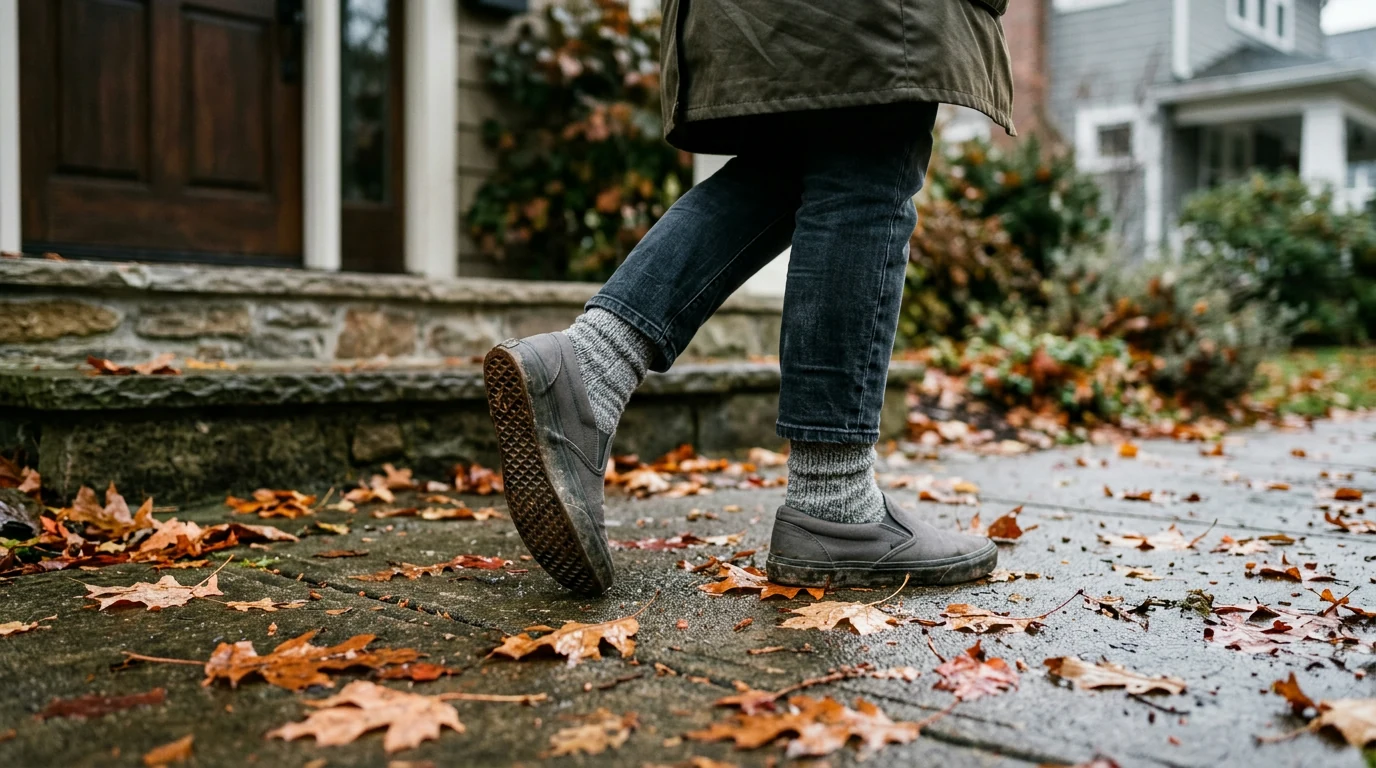
- Calvin Klein Casual Sneakers with Sleek Design and Comfortable Fit
- Calvin Klein Women’s Leather Sneakers
FAQ
Can an outdoor enclosure replace walks on a harness?
It’s a different option: an enclosure offers consistent, contained enrichment with less unpredictability, while harness walks provide roaming variety but require training and close supervision. Many cats do best when you use both depending on their comfort level and your schedule.
How many cats can use the enclosure at once?
Match shared time to your cats’ relationships and make sure there are multiple resting spots so no one gets cornered or pushed out. Start with one cat at a time, then try short supervised shared sessions while you watch for tension or resource guarding.
How do you keep an outdoor cat enclosure comfortable in summer and winter?
In summer, aim for partial shade, provide fresh water during supervised time, and keep sessions shorter during peak heat. In winter, keep the interior dry, limit time in the cold, and encourage use of the sheltered house area while you monitor your cat’s comfort.









Leave a comment