5-Level Cat Tree: Hammock, Condo & Scratch Posts
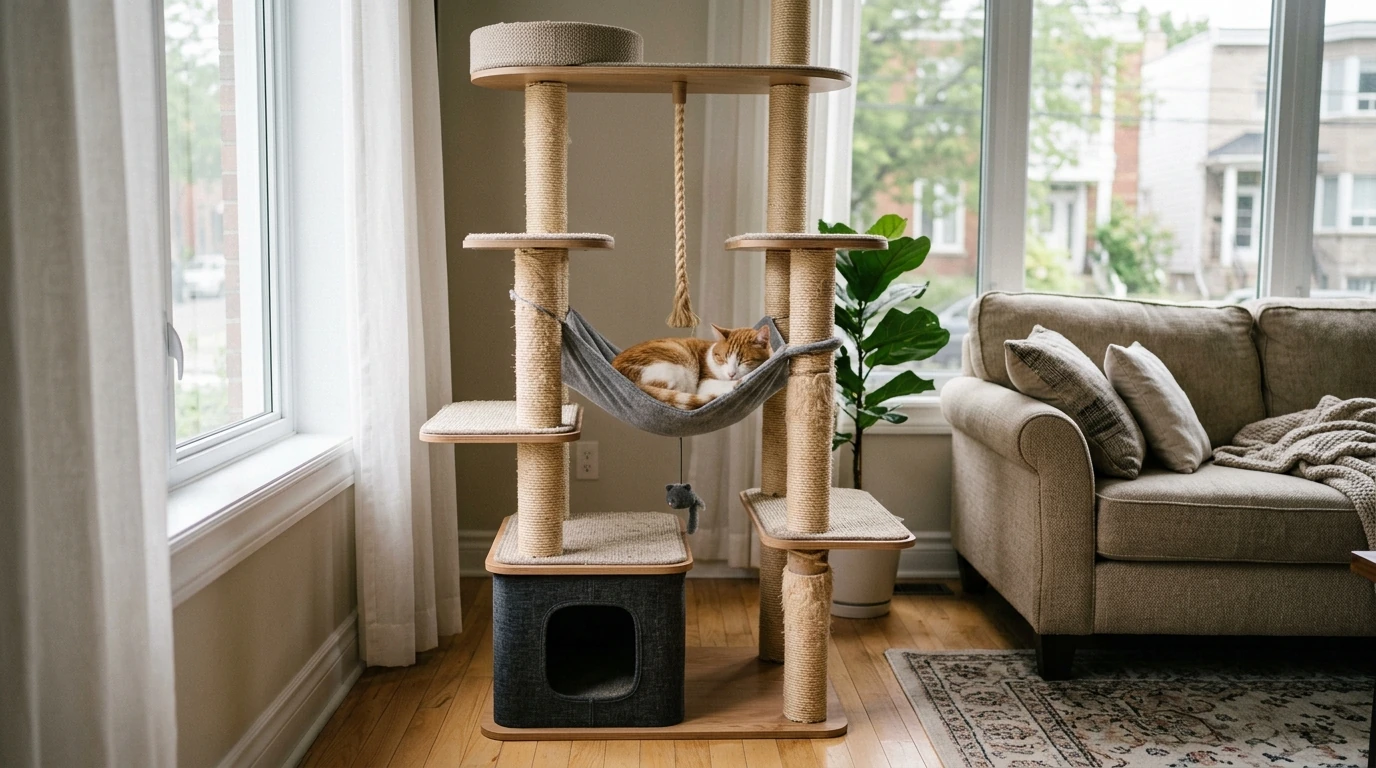
A 5-Level Home Base for Indoor Cats: Hammock Lounging, Scratching, and a Cozy Condo
Indoor cats do best when their space is built around the things they’re wired to do every day: climb, perch, scratch, nap, and retreat when they want privacy. Our 5-level setup—with a large hammock, multiple scratching posts, and a cozy condo—helps you turn one corner of your home into a full routine: play up top, lounge in the middle, and rest down low. When your cat has a predictable “yes” space for normal cat behavior, it’s much easier to keep energy focused on the cat tree instead of furniture, curtains, and countertops. For more guidance, see 2026 Top-Rated All Cat Trees.
Why a multi-level cat tree changes everyday indoor life
Vertical space is one of the simplest upgrades you can give an indoor cat. It adds usable territory without taking over your floor plan, which matters in apartments, smaller homes, or busy households where your cat wants a little control over their surroundings.
- More territory, same footprint: Multiple tiers function like “extra rooms” for your cat—perches, platforms, and rest spots stacked in one place.
- Supports natural movement patterns: Cats climb to investigate, perch to observe, then settle into a nap when they feel secure and elevated.
- Built-in exercise loop: A consistent climb-and-perch route encourages jumping, stretching, and light cardio—often reducing boredom behaviors.
- Helps multi-cat dynamics: Clear options (top perch, mid-level lounge, hidden condo) can reduce crowding and tension over a single favorite spot.
- Easy enrichment near a window: Place it by natural light for a daily rhythm of birdwatching, sunbathing, and calmer downtime.
For deeper guidance on building a cat-friendly indoor environment, the American Association of Feline Practitioners outlines key needs like perching, hiding, and scratching in their Feline Environmental Needs Guidelines.
The comfort zones: hammock lounging and condo privacy
Most cats rotate between “open and social” and “quiet and tucked away.” That’s why pairing a hammock-style bed with an enclosed condo works so well: you’re giving your cat two different kinds of rest, without needing multiple bulky pieces around the house.
- Hammock lounging: A hammock creates a cradled, sink-in nap spot for curled sleeping and relaxed sprawl—great for cats who love soft baskets and blankets.
- Condo privacy: The condo becomes a covered retreat for cats that prefer enclosed naps, need decompression time, or feel overwhelmed by household activity.
- One structure, multiple moods: Open hammock for confident lounging; closed condo for a quiet reset.
- Multi-cat predictability: The condo can be a reliable “do not disturb” option while open platforms remain available for rotation.
- Redirects off-limits nesting: Providing better nap options helps guide cats away from laundry baskets, shelves, and pillows.
Quick guide: matching features to common cat habits
| Cat habit at home | Best feature on this cat tree | What it helps with |
|---|---|---|
| Loves curling into blankets or baskets | Large hammock | Comfortable lounging spot that feels secure |
| Hides under beds or in closets | Cozy condo | Private resting area and calmer downtime |
| Scratches furniture corners | Scratching posts | Directs scratching to a designated spot |
| Jumps on counters for a better view | Multi-level platforms | Gives a higher perch without using countertops |
| Gets restless at night | Climb-and-perch route | Adds activity and routine before sleep |
Scratching posts that make household peace easier
Scratching isn’t “bad behavior”—it’s maintenance and communication. Cats scratch to condition claws, stretch shoulders and back, and leave scent markers that help them feel at home. The goal is to make the right scratching spot the easiest, most satisfying option.
- Multiple posts matter: More than one scratch zone on the same structure increases the chance your cat finds a good angle at the right moment—especially after naps.
- Place scratch where the habit already is: If your cat targets one couch corner, start with the cat tree nearby, then shift it gradually once post-scratching becomes the default.
- Pair scratching with transitions: A short play session followed by scratching and settling helps your cat “come down” from energy to rest.
The ASPCA’s overview of scratching behavior in cats explains why redirection and setup beat punishment when you’re building better habits.
Where this 5-level setup fits best in a home
A simple routine to help cats use it on day one
Care and upkeep for a cleaner, longer-lasting cat space
Shop our in-stock picks
- 5-Level Cat Tree with Large Hammock, Scratching Posts, and Cozy Condo for Indoor Cats — $48.97
- Calvin Klein Casual Sneakers with Sleek Design and Comfortable Fit — $70.01
FAQ
Is a 5-level cat tree suitable for a single indoor cat, or only multi-cat homes?
A single cat benefits from vertical territory, climbing routes, and varied nap spots just as much as multiple cats do. In multi-cat homes, the different levels and the enclosed condo help cats spread out and take turns without crowding. For either setup, placing it near a window can make it part of your cat’s daily routine.
How can a cat be encouraged to scratch the posts instead of the couch?
Start by placing the cat tree near the spot your cat already scratches, then reward scratching on the posts immediately so it becomes the better option. Use a simple play-to-scratch-to-rest routine to make post-scratching a natural transition after activity. Skip punishment and focus on consistent redirection to the posts.
What’s better for naps: the hammock or the condo?
The hammock is ideal for cats that like open lounging, stretching out, or keeping an eye on the room while they rest. The condo is better for cats that want privacy, prefer covered naps, or need a quiet retreat during busy household moments. Many cats switch between both depending on mood and activity levels at home.









Leave a comment