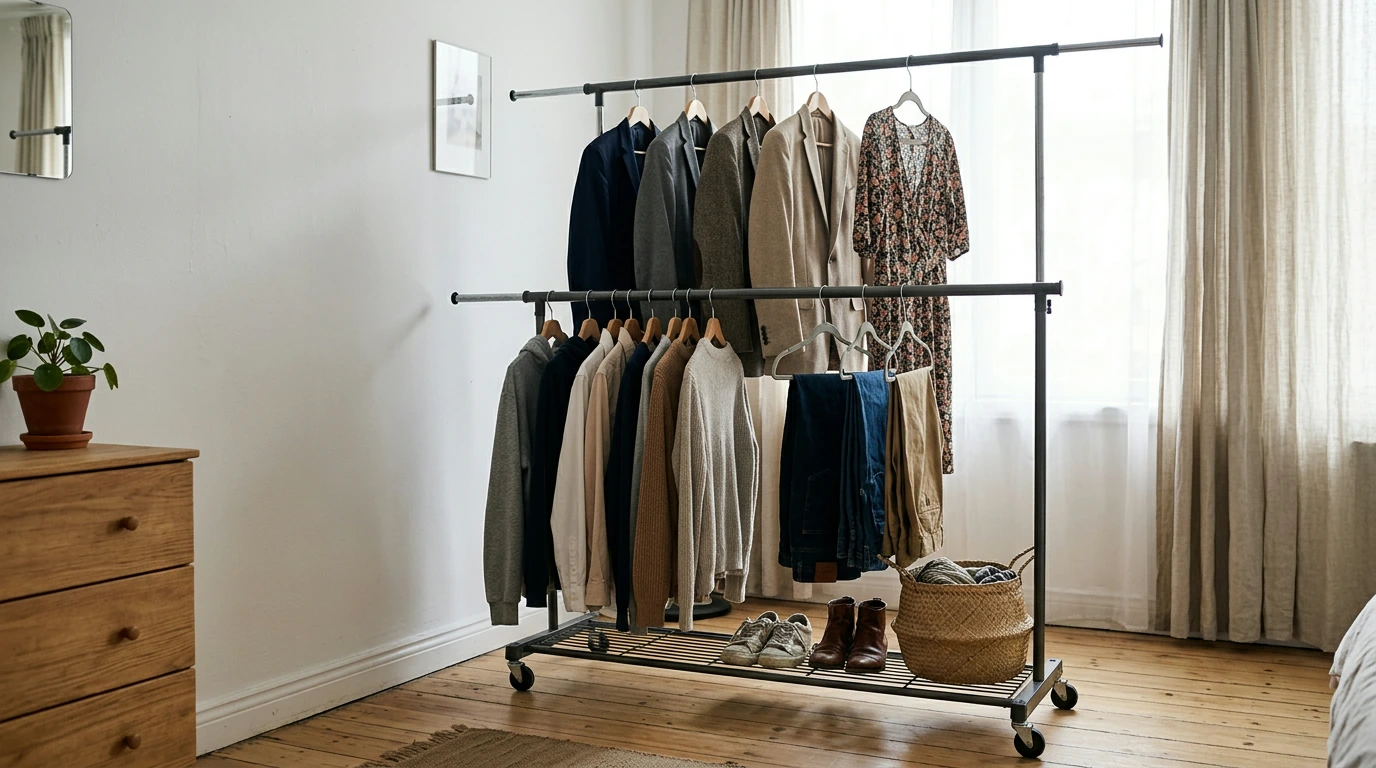
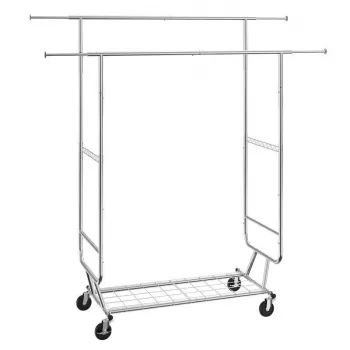
Closets fill up fast, and bulky wardrobes aren’t always an option—especially in apartments, shared rooms, or seasonal switch-outs. Our Adjustable Double Hanging Rod Garment Rack with Storage Shelf is a simple way to add hanging space and keep frequently used pieces visible, sorted, and easy to grab. With two hanging levels and a lower shelf for shoes or bins, it’s built for daily routines: getting ready faster, keeping outfits wrinkle-ready, and making the most of a small footprint.
What this rack helps solve in a real home
- Creates a dedicated “ready-to-wear” zone when closet space is limited
- Separates categories (tops vs. bottoms, workwear vs. casual, today vs. later) using two hanging rods
- Keeps floor clutter under control with an integrated storage shelf for shoes, bags, or folded items
- Works as a staging area for laundry-day air-drying, steaming, or outfit planning
- Supports seasonal rotations (coats and knits in winter, lighter layers in summer) without reworking an entire closet
Common use cases
| Space |
How the rack fits |
Best items to store |
| Bedroom corner |
Everyday closet extension |
Shirts, jeans, dresses, shoes on the shelf |
| Entryway |
Grab-and-go station |
Jackets, totes, umbrellas, sneakers |
| Laundry room |
Air-dry and staging |
Hangers, delicates, items to steam |
| Guest room |
Temporary closet |
Guest coats, spare hangers, folded towels in bins |
Double hanging rods: build a simple sorting system
- Use the top rod for longer or “no-wrinkle” priorities (dresses, coats, blazers) and the lower rod for shorter pieces (shirts, skirts, folded-over pants).
- Create a weekly rotation: one rod for “this week” outfits, the other for “next” or “needs altering/repair.”
- Pair hangers consistently (same style/shape) to keep spacing even and prevent shoulder bumps on knits.
- Keep a small gap between garment groups so sleeves don’t tangle—especially with sweaters or wide-cuff items.
Quick sorting ideas by rod
| Top rod |
Bottom rod |
| Coats, blazers, dresses |
Shirts, skirts, folded-over pants |
| Workwear/occasions |
Casual/everyday |
| “Wear next” outfits |
“Laundry/steam/return” items |
Adjustability: make it work for your clothing, not the other way around
Layout planning checklist
| What you store most |
Suggested setup focus |
Bonus tip |
| Shirts & tees |
More space for short items |
Group by color for faster matching |
| Coats & layers |
More clearance up top |
Keep a lint brush on the shelf |
| Mixed wardrobe |
Balanced spacing |
Reserve 10–20% empty space for new additions |
Use the storage shelf to reduce “floor drift”
Shelf organization map
| Shelf zone |
What to place there |
Why it helps |
| Left |
Everyday shoes |
Cuts down on morning searching |
| Center |
Bins (accessories) |
Keeps small items contained |
| Right |
Bag/gear |
Preps for quick exits |
Placement and daily-use habits that keep it tidy
- Choose a spot with enough clearance to slide hangers easily—tight corners can turn into tangles.
- If used near an entryway, distribute heavier outerwear evenly so one side doesn’t become the “coat pile.”
- Leave a little space between the rack and the wall to reduce scuffs and allow airflow around garments.
- Avoid blocking exits, heaters, or vents; clothing should stay away from heat sources and high-traffic pinch points.
- For general stability awareness in the home, the U.S. Consumer Product Safety Commission shares tip-over prevention guidance here: https://www.cpsc.gov/Safety-Education/Safety-Guides/Furniture-and-TV-Tip-Overs.
Fast reset routine (2 minutes)
| Step |
What to do |
| 1 |
Return stray items to the correct rod (ready vs. in progress) |
| 2 |
Straighten hanger spacing so garments don’t overlap |
| 3 |
Put shoes back on the shelf and clear the floor around the rack |
At-a-glance rack use planner
If you map the rack before you load it, your setup stays organized longer. For fabric care basics that help reduce re-washing and over-drying, you can also reference the American Cleaning Institute’s laundry guidance: https://www.cleaninginstitute.org/cleaning-tips/clothes.
| Area |
Top rod |
Bottom rod |
Shelf |
| Everyday |
Jackets, blazers |
Shirts, pants |
Shoes + work bag |
| Seasonal |
Coats / heavier layers |
Light layers |
Bins for gloves/scarves |
| Care |
Items to steam |
Air-dry pieces |
Lint roller + stain pen |
Product picks from our team
Quick details to confirm before checkout
| Item |
What to check |
| Measurements |
Ensure the footprint fits the planned spot with room to slide hangers |
| Clothing mix |
Plan rod spacing around long items vs. short items |
| Shelf plan |
Decide whether shoes, bins, or bags will live on the bottom |
FAQ
How do double hanging rods help compared to a single bar rack?
Two levels let you separate garments by type or “readiness,” so outfits are easier to see and you’re less likely to crowd hangers together. It also makes a simple daily system possible—one rod for ready-to-wear, one rod for in-progress pieces like returns, airing out, or steaming.
What should go on the shelf to keep the rack from looking cluttered?
Keep it to the essentials: everyday shoes and one grab-and-go bag, plus matching bins for small accessories. Group care tools together in one corner and leave a little open space so the shelf still looks intentional.
Is it better to hang sweaters or fold them on the shelf?
Most sweaters do better folded, since hanging can stretch knits at the shoulders over time. Use the rods for structured pieces that benefit from hanging—like blazers, coats, and woven shirts—so your wardrobe keeps its shape.
Recommended for you









Leave a comment